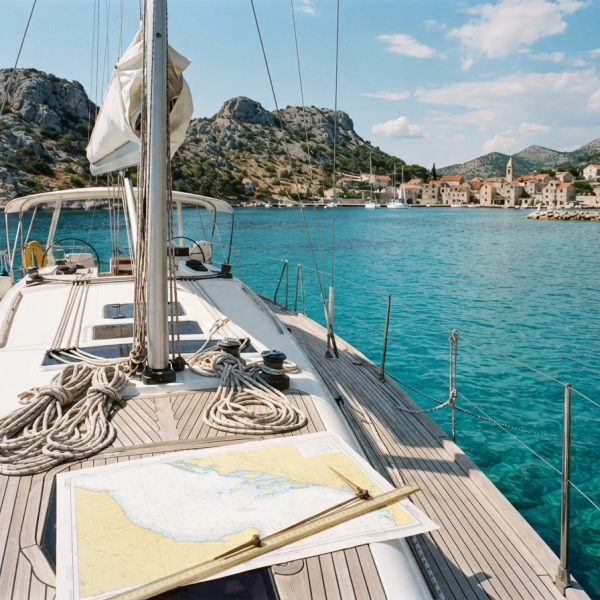
The Croatian coast has more than a thousand islands, hidden coves, ancient stone harbours and some of the clearest water in the Mediterranean, and every summer sailors, kayakers, divers and hikers arrive from English speaking countries to explore it. Most of them rely on charter contracts, harbour rules, weather bulletins, pilot books and local guides that were written first in Croatian. On the water, language is a safety tool. A misunderstood instruction about anchoring, a misread warning about wind or a vague clause in a rental agreement can turn a dream holiday into a stressful one. Practical Croatian English translation for adventure travel makes every rule, warning and route description clear, so that visitors can enjoy the sea with confidence. This article covers the texts that matter most for sailing and outdoor operators and how to prepare them for English speaking guests.
Charter contracts and rental terms
A charter agreement defines what the guest is paying for, who is responsible for damage and what happens when the weather is bad. It should state the boat, the dates, the base, the deposit, the insurance, the fuel and cleaning rules and the procedure for returning the vessel, in clear numbered clauses. Croatian legal and maritime terms must be translated with precision, and the English version should use the same words for the same obligations throughout. Operators who need croatian english translation for contracts and booking pages should ask the translator to flag any clause that depends on Croatian law, so that guests understand what applies to them.
Skipper briefings and safety instructions
The first hour after a guest arrives at the marina is the most important. The briefing explains how the engine, the sails, the toilets and the electrical systems work, where the safety equipment is stored and what to do in an emergency. These instructions should be written in short sentences with one action each, supported by labelled photographs. Names of parts and equipment need exact English terms, and numbers such as radio channels and emergency contacts must be easy to find. A laminated card on board, in English and Croatian, is far more useful than a long manual that no one reads at sea.
Weather, wind and sea conditions
The Adriatic has local winds with their own names, and visitors often hear these names in forecasts and from locals without knowing what they mean. A good English guide explains each wind in plain words, describing its direction, strength, season and effect on anchorages. Forecast terms, warning levels and the scale of sea conditions should be translated consistently, and a short glossary on the boat helps guests understand what they hear on the radio. Never soften a warning in translation, and always give the source and time of each forecast, so that guests know how current the information is.
Harbour rules, anchorages and nature protection
Marinas, harbours and national parks have rules on mooring, fees, noise, waste, fires and protected areas. Notices are often short and formal, and a literal translation can leave visitors confused. The English version should say what is allowed, what is forbidden and what the penalty is, and it should give opening hours, prices and contact numbers. Our article on English to Romanian translation shows how consistent terms and regular review keep public notices reliable in several languages, which is valuable for any harbour authority or park office.
Kayaking, diving and hiking excursions
Besides sailing, many visitors book kayak tours, diving trips, cycling routes and coastal hikes. Each activity needs a program description with meeting point, duration, difficulty, what to bring and what is included, and a safety briefing that matches the level of risk. Waivers and health questionnaires must be translated exactly, because they carry legal weight. Dive operators should use standard English diving terms, and hiking guides should describe paths with landmarks and distances in both kilometres and miles when guests come from different countries.
Food, local culture and village life
Part of the adventure is meeting the places that boats and trails reach. Konobas, fish markets, small museums and festivals offer a taste of local life, and visitors enjoy a few lines of explanation about dishes, customs and history. Menus should keep the Croatian names and add short English descriptions of ingredients, and local expressions can be offered as a friendly phrase list: greetings, thanks, a request for the bill. Tone matters, and a warm and relaxed voice suits a coastal holiday better than a formal guidebook.
Websites, reviews and social proof
Many guests choose operators by reading websites and reviews. English pages should be clear, honest and complete, with photographs that show the real boat or tour, a simple price table and straightforward cancellation terms. Replies to reviews should be prompt, polite and specific, thanking the guest and addressing any problem. Keep a style sheet with approved names of places, boats and routes, so that the website, brochures and social posts use the same spellings. Consistency builds trust, and trust is what brings guests back for another summer on the water.
Operators who publish in English often find that a website written by a non-native speaker still needs a careful pass for idiom, spelling and tone, even when the facts are correct. A company offering professional translation services can review booking pages, safety notes and tour descriptions together, so that the same place names, boat names and cancellation terms appear everywhere. That single consistent version is easier for guests to trust, and it reduces the questions and corrections that arrive after a booking has already been made.
Where to read more
For a neutral overview of the sea and its coastline, see the Wikipedia article on the Adriatic Sea, which describes its geography and the countries that border it.